Car Polishing
Helping you become un-confused!
Car polishing is a topic filled with endless opinions from so-called experts and well-intentioned, ignorant people. Visit any detailing forum and not only will you find yourself quickly overwhelmed with endless opinions, but you will find that the industry itself is inconsistent with labeling, terminology, and opinion, and one manufacturer contradicts another manufacturer.
Unfortunately the industry of car care does very little at best to help educate the consumer so that we as car owners can make informed decisions. Turning a profit is at the top of every manufacturers priority list, and with the help of slick marketing and advertising, they have most of us chasing our tails from one product to the next, all in the name of simply trying to polish our cars.
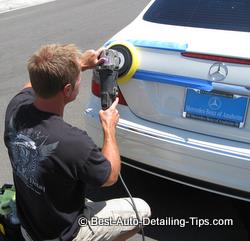
Let's Keep It Simple and Cut To The Chase
I suspect you didn’t come here because you enjoy polishing cars. You came because you want a shinier car — and you’ve simply accepted that polishing is the price of admission.
Here are my top two best car polishing kits I recommend —and recommend for the following reasons:
- Each kit comes with safest type of polisher that can be used by any complete beginner to safely and effectively produce professional results.
- Each kit comes with the buffer, polishing pads, and polishes necessary to permanently refine your car paint to create that show car look you are after.
- Shopping car polishing kits will save you time and money when compared to sourcing all the necessary items individually.
Griot's Garage Car Polishing Kit
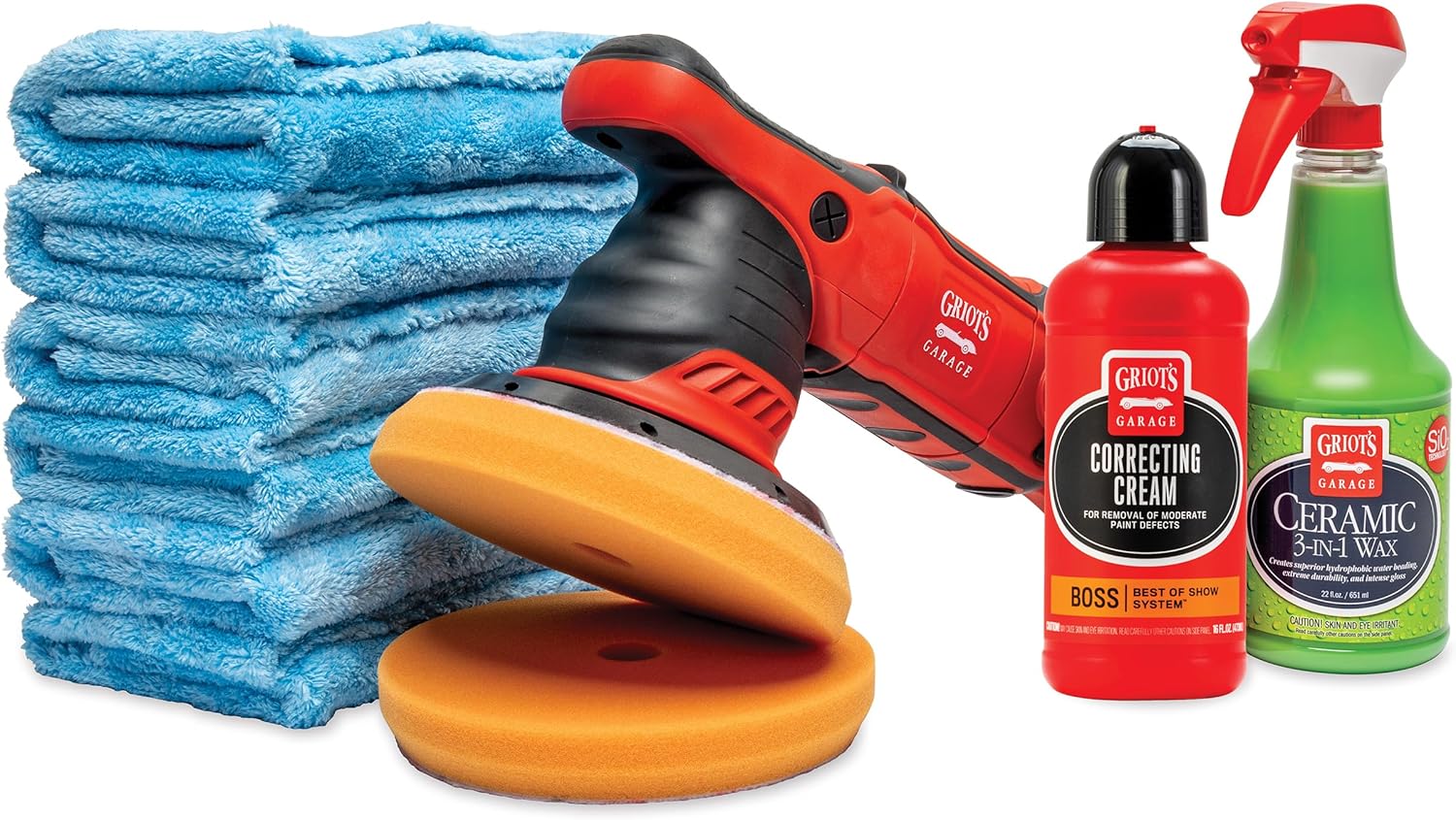
Griot's Garage Car Polishing Kit on Amazon
- Complete Car Polishing Kit:
Includes the high-performance G9 Random Orbital Polisher, BOSS Correcting Cream, a pair of 6.5" Orange Foam Correcting Pads, six ultra-soft Edgeless Microfiber Towels, and Ceramic 3-in-1 Wax. - All-in-One Detail Bundle:
The powerful and feature-loaded G9 polisher provides effortless paint correction. Pair it with the BOSS Correcting Cream to eliminate moderate to heavy defects, then seal the deal with the Ceramic 3-in-1 Wax for long-lasting protection. - Advanced 3-in-1 Ceramic Wax:
Engineered with advanced polymers and SiO2, this water-resistant wax shields your paint from UV damage, staining, and etching. Its self-cleaning properties also repel dust and dirt, keeping the surface cleaner for longer. - High-Efficiency Foam Pads:
Designed with a flat, beveled face to ensure even product application and smooth buffing. The durable, tear-resistant foam construction is fully machine washable for repeated use. - Scratch-Free Microfiber Towels:
Complete your detail safely with six premium edgeless towels. Featuring a long, plush nap and a borderless design, they glide effortlessly across delicate finishes without risking swirls or scratches.
Darren's Note: This kit from Griot's is my first pick for the following reasons:
- I prefer this buffer due to overall polishing experience due to better ergonomics.
- Comes with a single polish that replaces the need for multiple compounds/polishes.
Adam's Car Polishing Kit
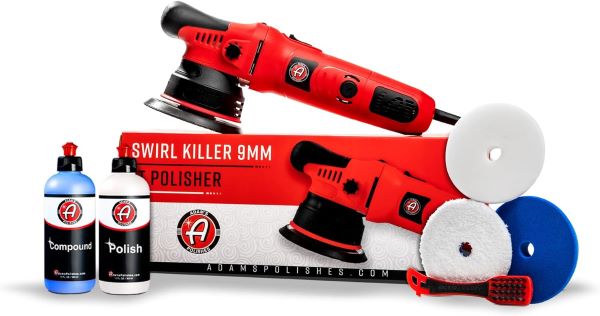
Adam's Car Polishing Kit on Amazon
- Patent Pending Integrated Polishing Light and 25 Foot Detachable Cord:
Adams Swirl Killer Pro is a full sized paint correction tool. Engineered after extensive research and development, it features an integrated polishing light to maximize efficiency and reduce user fatigue during long paint correction sessions. - Essential Auto Detailing Tool:
Representing the latest advancement in paint perfection, this detailing machine is built specifically for ergonomic comfort and efficiency. The high capacity 5000 OPM motor allows operators to apply required pressure without risking motor strain or premature wear. - Eliminates Swirls Scratches and Defects:
The Swirl Killer 15mm dual action machine is highly versatile, capable of everything from paint restoration to scrubbing carpets, upholstery, and applying glazes, sealants, or wax. It also polishes chrome, aluminum, and diamond plate. Weighing under 5.5 pounds, it features a convenient detachable 25 foot power cord to keep your workspace free of messy extension cords. - Powerful Correcting Ability:
Delivering 1000W of power and up to 5000 OPM, this tool combines a 15mm long throw orbit to cover maximum surface area while ensuring perfectly even product distribution. It is versatile enough to paint correct an entire vehicle of any size, from large trucks and SUVs to compact cars and tight areas. - Full Satisfaction Guarantee:
Adams is dedicated to providing high quality car cleaning products, including premium waxes, sealants, ceramic coatings, microfiber towels, and garage tools. If you are not completely satisfied with your purchase, let us know and we will do everything possible to make it right.
Darren's Note: This kit is my second choice. If you are part of the "more is better" camp, then this is the kit for you due to the fact that you literally get more of stuff: more compound/polishes, more pads, etc.
A great kit, just not my true first choice.
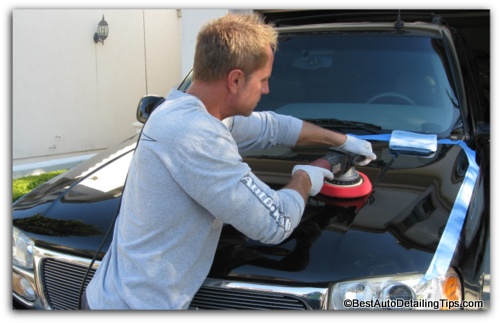
"Within the world of car care and detailing there exist endless opinions from so-called experts and so-called professionals. Let me help you filter through a topic that many people just like yourself find so confusing and overwhelming!"
Car Polishing:
Questions and Answers
Q. I heard you should never use a buffer on your car?
A. Sure, if you are willing to accept marginal shine and marginal results in life. The simple answer is that the person behind the buffer is the problem, not the buffer itself. Polishing by hand will never compete with what can be accomplished with a machine buffer.
Q. Darren, it sounds like you are telling me that it is O.K. to polish my car with a buffer?
A. Yes. But with that said, I am of the opinion that I would only let a person use a dual-action buffer on my car as opposed to a rotary polisher.
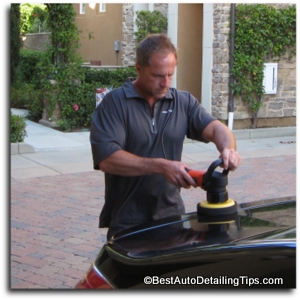
Q. Is it really possible for a beginner like myself to use a buffer and get professional results without damaging my car's paint?
A. YES! That is the great news. With modern advances in car polishers and buffers, now true beginners with no experience can get professional level results from the start. The two kits above are my answer to any beginner wanting to polish their car.
Q. I have heard that a high-speed buffer should never be used, but I had a friend tell me that a random orbital buffer is safe.
A. They are both "safe". But safe is determined by the person behind the buffer. Very few people know how to use a rotary in a manner that is safe, while the DA buffer will prove safe in anybody's hands.
Q. What exactly is the difference between a high-speed car buffer and a random orbital buffer?
A. The simple answer is this: a high-speed buffer spins on a single axis point and can produce unwanted buffer trails and holograms due to this single axis point. A dual-action polisher is just that: a spinning head that also vibrates on a separate free floating spindle —a buffer with a head that has two separate movement.
Which Car Buffer is Right for You
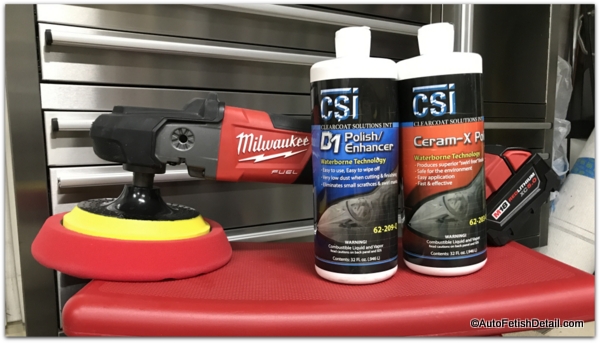
In today's world of information over-load, having too many choices back by endless opinions represents a difficult position for most people. So if you are looking to figure out the best buffer to polish your car with, go to my auto buffers review and this page will further help you along this daunting task!
I hope this information has been helpful! You can do me a favor and share or post this page to someone you think my also benefit from this information.
Sincerely,
Darren Priest
- Home
- Car Polish
- This Page
|
|

Thank you for your support of my website. I spend massive amounts of time bringing you my best car care tips that I bring from my 30+ years of experience as a professional detailer.
Sincerely,

Any time you use one of the Amazon links on this website and make a purchase, I earn a small commission (very small). This does not change the price you pay at Amazon, it simply means I earn a commission.
I hope you come back whenever you have any additional questions!